Cadaveric Anatomy:
A Review for Physical Therapists and Other Healthcare Professionals
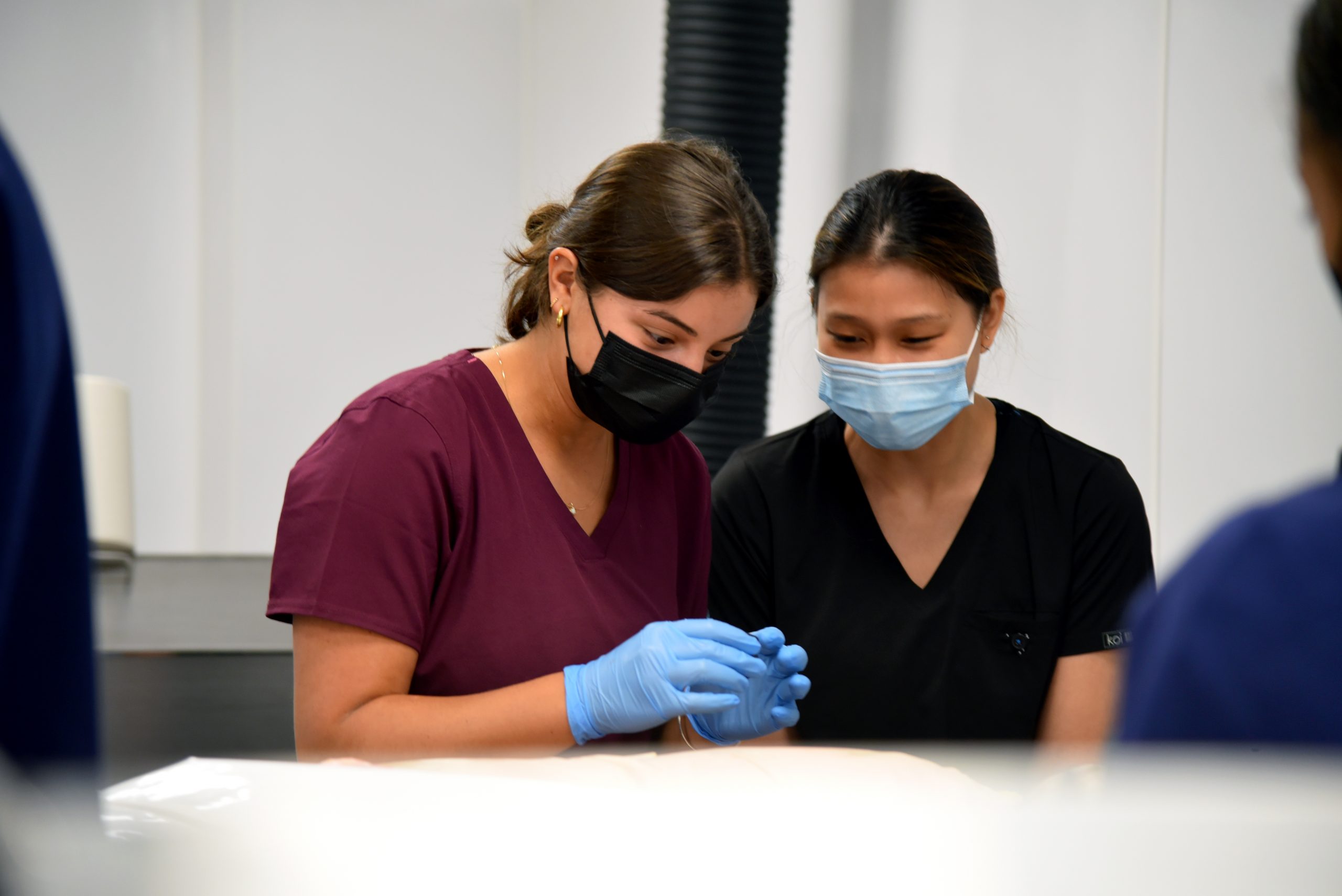
Build clinically relevant anatomy knowledge through a focused, hands-on learning experience in UConn’s Human Anatomy Learning Laboratory. Designed for physical therapists, athletic trainers, and other healthcare professionals, this in-person continuing education course combines cadaveric dissection, prosection review, and guided clinical application.
Participants will review the upper limb, cervical spine, thorax, lower trunk, pelvis, and lower limb while connecting anatomy to movement, function, injury, and clinical decision-making. The course pairs a brief orientation with immersive laboratory learning.
At a Glance

Format:
In-person, hands-on cadaveric anatomy review.

Audience:
Physical therapists, athletic trainers, and other healthcare professionals.

CEU/CEH Approved:
4 APTA CEH
? NATA BOC CEU

Cost:
TBD
Date: TBD
Location: Human Anatomy Learning Laboratory, Horsebarn Hill Sciences Complex, Storrs, CT
Earn Continuing Education Credit
This program is approved for continuing education credit by the Connecticut Chapter of the American Physical Therapy Association and the Board of Certification for the Athletic Trainer.
- Participants who successfully complete this course may earn 4 APTA CEH and ___ NATA BOC CEU.
- Continuing education documentation will be provided after successful course completion.
Course Highlights
- Cadaveric dissection and prosection review of clinically relevant musculoskeletal structures
- Focused review of the upper extremity, cervical spine, thorax, lumbar spine, pelvis, hip, knee, and related neurovascular structures
- Emphasis on anatomical relationships, movement, biomechanics, and clinical application
- Small-group laboratory format with guided instruction
- Hands-on review designed to strengthen practical understanding of anatomy for patient care
Who Should Attend
This course is intended for healthcare professionals seeking a practical, clinically focused anatomy review, including:
- Physical therapists and athletic trainers
- Occupational therapists and rehabilitation professionals
- Physician associates, nurses, and advanced practice providers
- Sports medicine and orthopedic care professionals
- Other clinicians who work with musculoskeletal anatomy, movement, injury, or patient care
What You’ll Learn
Through lecture, guided review, and hands-on lab experience, participants will connect musculoskeletal anatomy to movement, injury mechanisms, clinical scenarios, and patient care.
By the end of the course, participants will be able to:
- Identify major musculoskeletal structures on cadavers.
- Review clinically relevant bones, muscles, joints, tendons, and ligaments.
- Connect anatomy to movement, stability, and biomechanics.
- Relate anatomical structures to injury mechanisms, joint dysfunction, and surgical interventions.
- Apply three-dimensional anatomical understanding to representative clinical imaging.
- Build familiarity with dissection techniques used to examine neuromusculoskeletal structures.
Course Format
The course begins with orientation to:
- Laboratory procedures
- Safety protocols and PPE
- Key anatomical sites
- Technical skills of dissection
Participants then move into guided cadaveric dissection and prosection review of clinically relevant musculoskeletal structures.
Laboratory Content Includes
- Upper limb dissection and prosection review
- Glenohumeral joint dissection and reflection
- Brachial plexus review, as available
- Muscular and ligamentous structures of the elbow and forearm
- Cervical spine dissection and prosection review
- Posterior and anterior cervical structures
- Lower trunk and pelvis dissection and prosection review
- Lumbar paraspinals, gluteal musculature, and lumbar/sacral nerve supply
- Lower limb dissection and prosection review
- Hip joint dissection and reflection
- Sciatic nerve, femoral triangle, and neurovascular structures
- Knee joint dissection and prosection review
Course Agenda
Lecture
- 8:00–8:30 a.m. — Orientation to laboratory procedures and safety protocols
- 8:30–9:00 a.m. — Review of key anatomic sites
- Break and Transition to Laboratory
- 9:00–9:15 a.m. — Break and transition to laboratory
Break and Transition to Laboratory
- 9:15–10:45 a.m. — Dissection and review of upper body sites, including upper extremity, cervical spine, and thorax
- 10:45–11:00 a.m. — Break
- 11:00 a.m.–12:30 p.m. — Dissection and review of lower body sites, including lower extremity, lumbar spine, and pelvis
Laboratory
- 9:15–10:45 a.m. — Dissection and review of upper body sites, including upper extremity, cervical spine, and thorax
- 10:45–11:00 a.m. — Break
- 11:00 a.m.–12:30 p.m. — Dissection and review of lower body sites, including lower extremity, lumbar spine, and pelvis
Registration
Because this course includes hands-on laboratory learning, space is limited.
Questions?
Questions about the course, registration, or continuing education credit? Contact the Human Anatomy Learning Laboratory team
Next Steps
Please visit our Contact Us page to connect.